
Development
Turnkey development: what is included from idea to launch
A practical explanation of where coding ends and turnkey development begins, from client-owned accounts and infrastructure to launch and support.
July 16, 2026 · 7 min read
By: Artem Tur
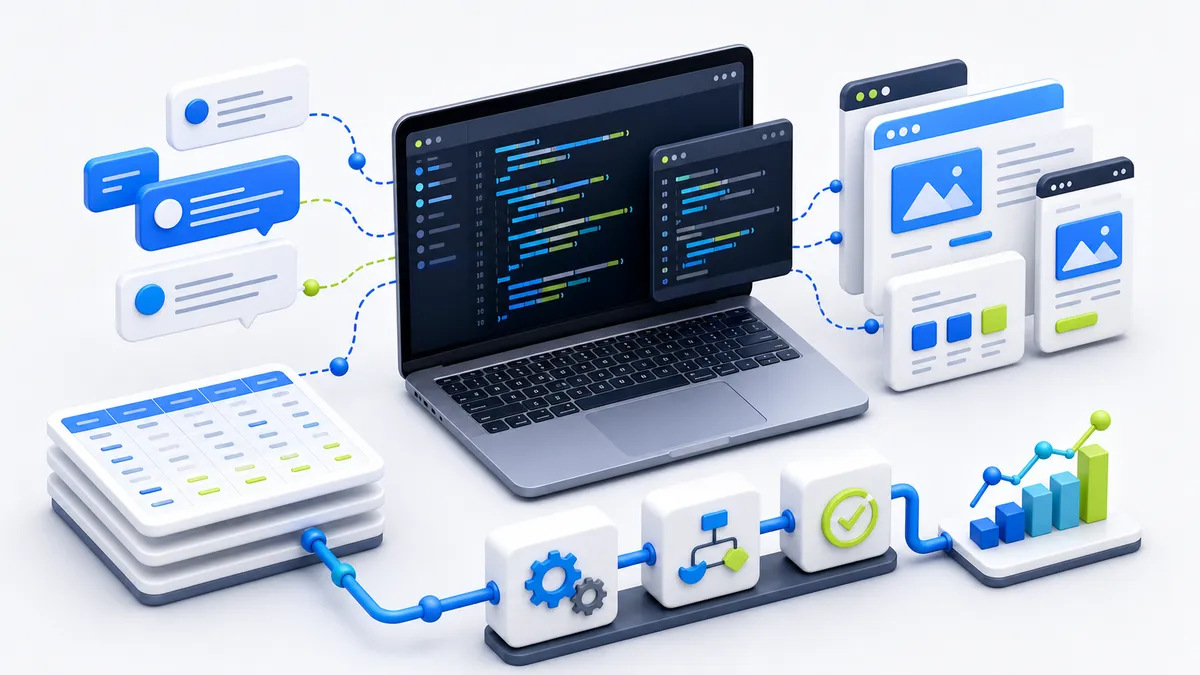
Turnkey development does not mean receiving a code archive and then figuring out domains, servers, accounts, and deployment alone. It means taking the agreed technical work from an initial business task to a working production launch: defining the scope, choosing the architecture, registering required services, building the solution, connecting integrations, testing real scenarios, and handing over access and operating notes.
This format is particularly useful for a small business. The owner does not have to coordinate separate people for the website, Telegram bot, hosting, and automation. One developer is responsible for the agreed technical path and explains what decisions, materials, and approvals are still required from the client.
Turnkey development starts before coding
The first step is to define the result. “We need a Telegram bot” is not yet a complete task. A useful brief explains what the bot should ask, who receives the request, where the data is stored, and what should happen when an external service is unavailable.
A website needs the same clarity. Before selecting a visual direction, we should know which services need separate pages, who buys them, which questions prevent a visitor from contacting the business, and where the page should lead next. An automation project starts by mapping the current manual workflow: where data comes from, who handles it, and what usable output is expected.
This produces a launch scope with pages, bot flows, data fields, integrations, and acceptance conditions. Price and timeline can then be estimated against something concrete. A fixed number offered before this step is usually only a guess.
What a turnkey service includes
The exact scope changes with each project, but a complete launch normally combines several related areas.
Structure and technical decisions
I translate the business task into a practical flow: website pages, user steps inside the bot, data sources, manager actions, and external services. The technology follows the task. A service website may only need Astro and static hosting. A bot may require Python, a database, and a server. A parser may need scheduling, exports, and error reporting.
The goal is not to add the largest possible stack. It is to build the smallest architecture that can operate reliably, be explained after handoff, and grow when the business has a proven reason to add more.
Domain, hosting, and client-owned accounts
If nothing has been registered yet, I can select a suitable domain, hosting provider, and supporting services, then guide or complete their registration and configuration. The accounts are created in the client’s name. The client remains the owner of the domain, server, bot, analytics property, and other digital assets.
Third-party costs are approved before payment. Domain renewals, hosting plans, paid APIs, email tools, and similar services are not hidden inside an unclear development fee. This makes future renewals and handoff much safer.
Content, development, and integrations
For a website, I can prepare page structure, service copy, FAQ answers, metadata, and calls to action from the business information provided. The client approves factual claims, prices, policies, and legal wording. The build can then include responsive pages, optimized images, sitemap and robots configuration, canonical and language links, and relevant structured data.
For a Telegram bot, the work may include commands, buttons, dialog states, manager notifications, data storage, and admin actions. The bot can connect to a CRM, spreadsheet, payment provider, or another API when the service offers appropriate access and the workflow respects its rules.
Automation can collect agreed open data, prepare reports, move requests between systems, or run repeated tasks on a schedule. The sources, fields, output format, update frequency, and expected failure behavior are defined before implementation.
Testing and production launch
The project is not complete because it runs on the developer’s computer. A website needs mobile and desktop checks, working links, correct metadata, and a verified production build. A bot needs normal and failure-path tests: empty input, repeated commands, unavailable APIs, interrupted connections, and notification delivery. A parser needs output validation and predictable behavior when a source changes or becomes unavailable.
After testing, the solution is deployed to the production domain or server. The client receives account access, deployment information, and concise operating notes: where content is changed, how a service is restarted, where requests appear, and what to check when something goes wrong.
Example: a website, bot, and automation working together
Consider a service company that receives enquiries through Telegram. It needs a website with separate service pages, useful answers, and a clear contact path. A visitor clicks a button and enters a bot. The bot asks for the service, city, preferred time, and contact details, then sends a structured request to a manager and stores it in a spreadsheet or database.
As a turnkey project, I can prepare the website structure, register the domain and hosting in the client’s name, build the pages, configure the technical SEO base, register the bot, deploy its application, connect request storage, and test the complete route from a website page to the manager notification.
This is a realistic workflow example, not a fabricated case study or a promise that every business needs the same architecture. Its purpose is to show how separate technical parts become one usable process.
What the client still needs to do
Turnkey does not mean the business owner disappears from the project. The client defines business rules, confirms facts, provides lawful access, approves copy, and makes important commercial decisions. When payments or personal data are involved, the business owner is also responsible for contracts, privacy policies, and lawful processing.
The developer is responsible for the agreed technical implementation. The client is responsible for the accuracy of commercial and legal information. This division is more useful than promising that the client will never need to participate.
What is not automatically included
Turnkey does not mean unlimited changes. The launch version is documented. A new customer dashboard, another CRM, a full redesign, or an additional language requested after approval becomes a separate task.
External services are also paid separately. Their prices are controlled by their providers. Twenty-four-hour incident response is not automatically included either; response time and availability are agreed as part of a support arrangement.
Support after launch
After launch, a project may need content changes, fixes, integration checks, dependency updates, or small improvements. These can be ordered as one-off tasks. When work is recurring, a monthly scope with clear priorities is usually easier to manage.
Before supporting a project built by someone else, I review the code, hosting, and access. Sometimes accumulated problems should be corrected before regular maintenance is safe. Substantial new modules are estimated separately so support does not turn into an undefined development project.
When turnkey development is a good fit
This format fits a business that needs one responsible technical contact and does not have an in-house developer to connect all the pieces. It is especially useful when the launch combines a domain, hosting, website, bot, API, or data workflow and the full customer journey must work, not just each component in isolation.
For a practical estimate, send the business goal, current workflow, desired first-launch result, and available materials. I will break the task into stages, identify third-party costs, and suggest a focused launch version. See all development services or browse the detailed FAQ.
Next step
Turnkey development services
Choose a website, Telegram bot, data collection tool, or ongoing project support for your business task.
View all services